

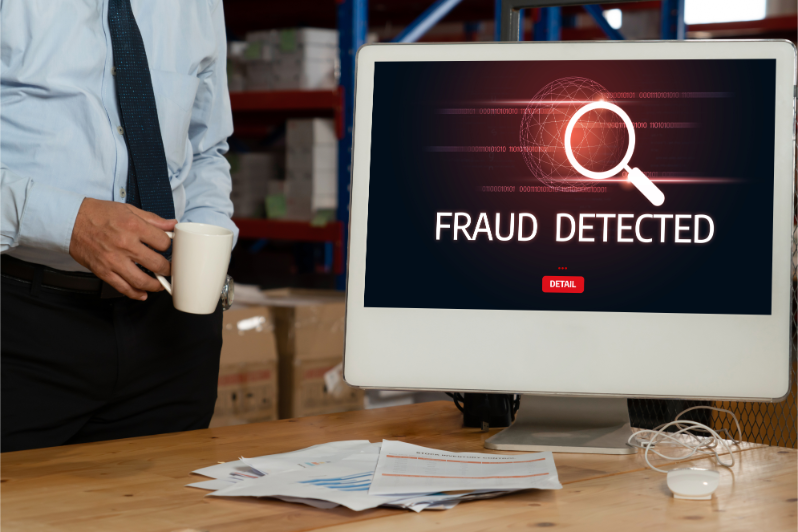
Detecting errors and detecting fraud are related tasks, but they are not the same job, and an audit approach that treats them identically misses things. An error is unintentional, a misapplied accounting rule, a transposed figure, a missed entry. Fraud is deliberate, and the person responsible for it is actively trying to keep it hidden from the very checks an auditor would normally rely on. This guide covers the common types of accounting errors, how they differ from fraud in both cause and detection approach, and the core techniques auditors use to find both.
Types of Errors Auditors Look For
Not all accounting errors look the same, and knowing which type is present shapes how it gets traced back to its source.
- Errors of omission. A transaction is left out of the books entirely, so nothing looks obviously wrong until the omission is cross-checked against source documents.
- Errors of commission. A transaction is recorded, but incorrectly, a wrong amount, the wrong account, or a simple transposition of digits.
- Errors of principle. A transaction is recorded using the wrong accounting treatment altogether, such as posting a capital expense as a revenue expense.
- Compensating errors. Two or more errors cancel each other out, so the trial balance still appears to agree even though the underlying records are wrong. These are the hardest to detect through balance-checking alone, since the very method meant to catch errors shows no discrepancy.
Errors Versus Fraud: Why the Distinction Changes the Audit Approach
Under ISA 240, the auditor’s responsibility relating to fraud in a financial statement audit, an auditor is required to maintain professional skepticism specifically because fraud, unlike error, involves someone actively concealing what they’ve done. A misapplied depreciation rate is an error the bookkeeper will readily explain once asked. A fictitious vendor invoice used to divert funds is fraud, and the person responsible has usually built the paper trail to survive a routine check. This is why fraud detection leans more heavily on analytical review, unusual transaction patterns, and testing management override of controls, rather than the balance-matching techniques that catch most ordinary errors.
Need Expert Advice?
Contact the team at Farahat & Co. for professional support and expert insights for businesses operating in the UAE.
Core Methods for Detecting Errors
- Checking the trial balance. Since every debit should have a matching credit, a trial balance that doesn’t balance points directly to an error, though a balanced trial balance doesn’t rule out compensating errors or errors of principle.
- Comparing data across books. Cross-referencing account books against the trial balance and supporting records surfaces discrepancies that a single-book review would miss.
- Verifying account balances. An account balance that doesn’t match its expected value, based on opening balance plus recorded movements, signals an entry was missed, duplicated, or misposted.
- Comparing year-over-year balances. The prior year’s closing balance should match the current year’s opening balance exactly. A mismatch is one of the fastest ways to catch a carry-forward error.
- Vouching against primary books of account. Tracing entries back to the original books where transactions were first recorded, and ultimately to source documents like invoices and receipts, confirms whether what’s in the ledger actually reflects what happened.
As a worked example: an auditor reviewing a trading company finds the trial balance agrees, but a review of the primary sales register shows an invoice recorded at AED 45,000 that was posted to the ledger as AED 54,000, offset elsewhere by an unrelated AED 9,000 understatement in a supplier account. The trial balance alone would never have flagged this. Only vouching the ledger entries back to source documents surfaced the compensating error.
Also check: Internal Audit Services
Techniques Focused on Fraud Rather Than Error
Because fraud is concealed deliberately, detecting it usually requires methods beyond standard balance-checking:
- Reconciling debtors and creditors. Tallying amounts owed and owing against independent confirmations, rather than only the company’s own records, can surface balances that were manipulated internally.
- Reviewing high-risk areas specifically. Cash transactions, related-party dealings, and manual journal entries made outside the normal transaction cycle carry a disproportionately higher fraud risk and warrant closer scrutiny than routine, system-generated entries.
- Testing for management override. Since fraud involving senior staff often bypasses the very controls designed to prevent it, auditors specifically test for unusual journal entries, overridden approval limits, and transactions processed outside normal business hours or workflow.
- Analytical review for anomalies. Unexplained trends, such as revenue growing while cash collections stay flat, or margins that don’t move the way the business model would predict, often surface fraud before any single transaction looks wrong on its own.
Must check: Forensic Audit Services | Certified Fraud Examiner
Limitations Auditors Should Keep in Mind
- A balanced trial balance is not proof of accuracy. Compensating errors and errors of principle can both leave it perfectly balanced.
- Sampling has inherent risk. Auditors typically test a sample of transactions rather than every single one, so a well-concealed fraud in an untested area can go unnoticed in a given period.
- Detection depends on cooperation. Missing documentation or an uncooperative client limits how far vouching and reconciliation can go, which is part of why a significant scope limitation can lead to a disclaimer of opinion rather than a clean report.
Frequently Asked Questions (FAQs)
What is the difference between an error and fraud in auditing?
What are the main types of accounting errors?
Why doesn't a balanced trial balance guarantee the accounts are correct?
How do auditors detect compensating errors?
What is ISA 240 and why does it matter?
Which areas of a business carry the highest fraud risk?
Need Expert Advice?
Contact the team at Farahat & Co. for professional support and expert insights for businesses operating in the UAE.
How Farahat & Co. Can Help
Farahat & Co. supports UAE businesses with error detection during statutory and internal audits, and with dedicated forensic audit services where fraud is suspected.
Contact Farahat & Co. today to discuss your audit and error detection requirements.
