

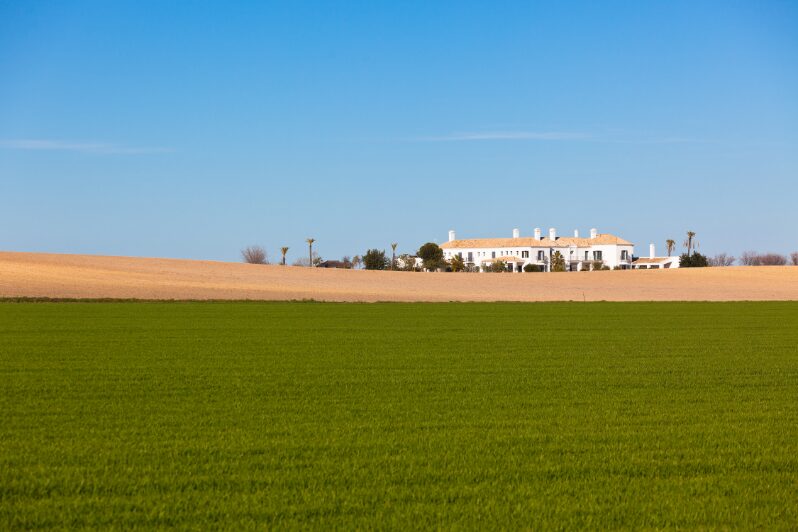
There are numerous farmhouses and farmlands across the UAE used for both commercial and non-commercial purposes, ranging from agricultural production to vacation rentals and staycation destinations. Owners of these properties need to understand the VAT implications of how their property is actually used, since the treatment differs considerably depending on classification.
This guide covers VAT treatment for residential farmhouses, commercial farmhouses and farm buildings, commercial and non-commercial farmland, mixed-use farm supplies, and a worked example showing how the classification actually works in practice.
Also check: Tax Agent Services
VAT Treatment for Farmhouses Used for Residential Purposes
A farmhouse in the UAE is treated as exempt from VAT if used as a residential unit, per FTA guidelines. A farmhouse qualifies as a residential building where the owner occupies it as their principal place of residence. A farmhouse cannot be treated as a residential building where it falls into any of the following categories:
- The building isn’t permanent and can be easily moved from one place to another
- The building is used as a hotel, motel, hospital, or bed and breakfast establishment
- Service apartments providing services beyond accommodation
- Any building constructed without lawful authority permission
For example, a family’s farmhouse used for weekend stays or staycations wouldn’t be considered residential, since it isn’t their primary residence, they live elsewhere and visit the farmland only for leisure. Where a farmhouse is used partially for residential purposes and partially as a hotel or motel, the residential portion can qualify as a residential building provided it meets the other qualifications under the executive regulations.
VAT Rules on the First Supply of Residential Farmhouses
Per FTA guidelines, the first supply of a farmhouse used for residential purposes is zero-rated within the first three years of completion. Subsequent supplies, including sales and leases, are exempt from VAT.
Must check: VAT Consultants in UAE
Need Expert Advice?
Contact the team at Farahat & Co. for professional support and expert insights for businesses operating in the UAE.
Impact on Other Categories of Farmhouses and Farm Buildings
Where a farmhouse on agricultural land doesn’t satisfy the residential building conditions, it falls into the commercial building category, subject to VAT at the standard rate of 5%. Examples include:
- Farmhouses not used as the primary residence of the owner or any person
- Buildings used for commercial activities like livestock, granaries, or stables
Impact on Commercial Farmlands
VAT treatment on the supply of farmland plots depends on whether the land is bare, and each supply needs to be assessed individually. The FTA’s VAT real estate guide treats farmland as commercial land where it has infrastructure making it functional, irrigation systems, roads, and utility connections, treating it as a commercial unit subject to the standard 5% VAT rate.
Impact on Non-Commercial Farmlands
Land used for private farming, growing crops or grazing livestock, still qualifies as commercial land if buildings or civil engineering works partially or fully cover it. Where the land carries no such civil engineering works or buildings and is used only for growing crops, it’s termed “bare land,” and its supply, whether by lease or sale, is exempt from VAT.
Supply of a Mixed-Use Farm
VAT treatment for a farm consisting of both commercial and residential elements depends on whether the supply is a single composite supply or a mixed supply. The supplier needs to determine whether the supply is composite or mixed, and the correct VAT treatment for each component.
For a single composite supply where different elements serve different purposes, the supplier identifies the predominant use of the farm and applies that VAT treatment to the entire supply. For example: if a farm’s principal use is as a family residence, it’s treated as predominantly residential and exempt from VAT; if a commercial farm has residential quarters for the farm manager and their family, it’s treated as predominantly commercial and subject to standard VAT.
Worked Example: Determining VAT on a Mixed-Use Farm
A farm covers 10 hectares, with 8 hectares used for commercial crop production (irrigated, with roads and utility infrastructure) and 2 hectares occupied by a single farmhouse used as the family’s primary residence. The owner sells the entire farm as one transaction. Assessing predominant use, the supplier looks at the farm as a whole: the 8 commercial hectares represent the clear majority of both land area and economic value, making commercial use the predominant purpose of the property overall. As a single composite supply, the entire sale is treated as commercial and subject to standard-rated VAT at 5%, even though the residential farmhouse itself would have qualified for exemption in isolation. Had the supplier instead structured the transaction as two separate supplies, the residential farmhouse portion and the commercial cropland portion sold under distinct agreements, a mixed supply analysis could apply instead, potentially allowing the residential portion to be treated as exempt separately from the commercial portion’s standard-rated treatment. This is exactly why how a transaction is structured can genuinely change its VAT outcome.
Documentation to Support Classification
Given how much VAT treatment depends on actual use rather than simple property type, maintaining supporting documentation matters. This includes evidence of principal residence status (utility bills, Emirates ID address, or similar), records showing the extent and nature of any commercial activity conducted on the property, and, for mixed-use farms, clear records distinguishing the residential and commercial portions if claiming separate treatment under a mixed supply structure. Without this kind of supporting evidence, a claimed exemption or zero-rating is harder to defend if reviewed by the FTA.
Frequently Asked Questions (FAQs)
Is a farmhouse used for weekend getaways exempt from VAT?
What VAT rate applies to a farmhouse used for commercial activities?
Is bare farmland exempt from VAT?
How is VAT determined for a farm with both residential and commercial elements?
Can structuring a sale as separate supplies change the VAT outcome for a mixed-use farm?
What documentation supports a residential VAT exemption claim for a farmhouse?
Need Expert Advice?
Contact the team at Farahat & Co. for professional support and expert insights for businesses operating in the UAE.
How Farahat & Co. Can Help
Farahat & Co., a trusted audit, accounting and tax firm in the UAE, helps farmhouse and farmland owners determine correct VAT classification and structure sale or lease transactions accurately.
Contact Farahat & Co. today to discuss your farmhouse and farmland VAT requirements.
